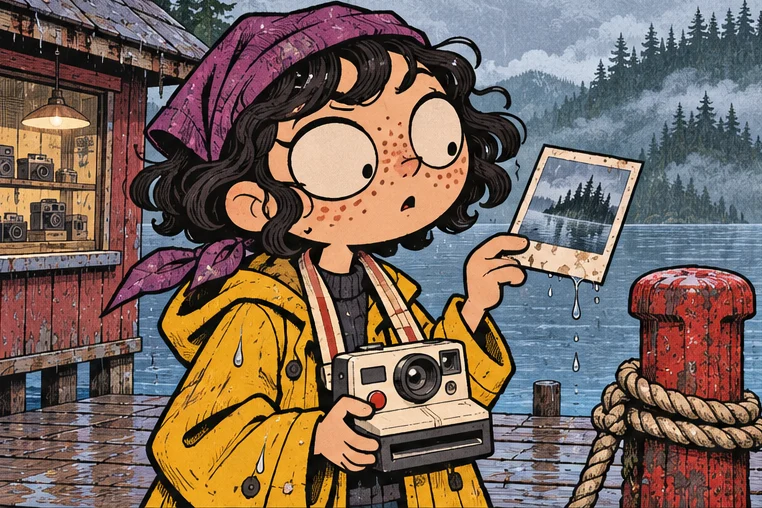
Kit Bell
Photo shop clerkKit’s instant camera catches wet footprints ten seconds before they appear on a dry dock. Draw her holding the print against the same row of boards, with her other hand pressed flat against dry wood.
Create an original Gravity Falls OC and draw them in a full-body portrait, a mystery scene, or an illustrated field journal. Start with Kit Bell, the lakeside photo clerk whose camera catches wet footprints ten seconds before they appear on the dock.
HEIC, JPEG, PNG or WebP · Up to 40 MB
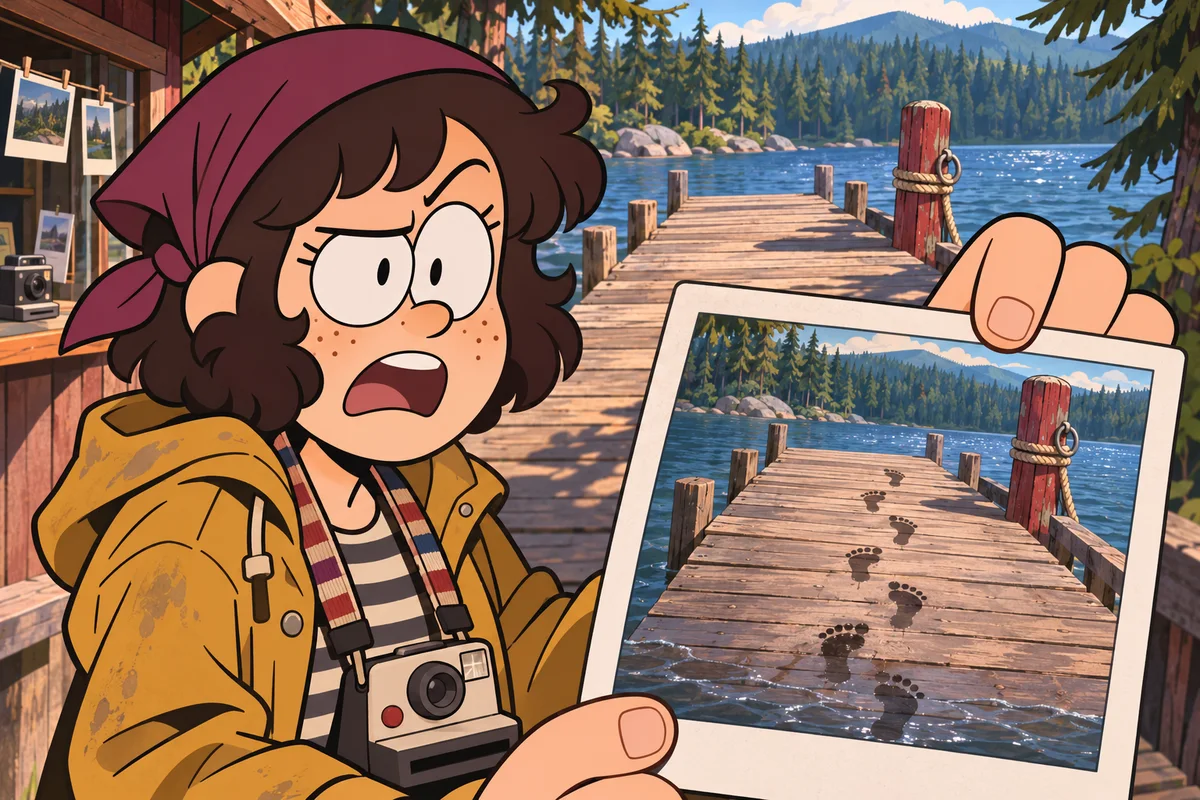
The dock is dry. In the photo she just took, wet footprints are already coming toward her.
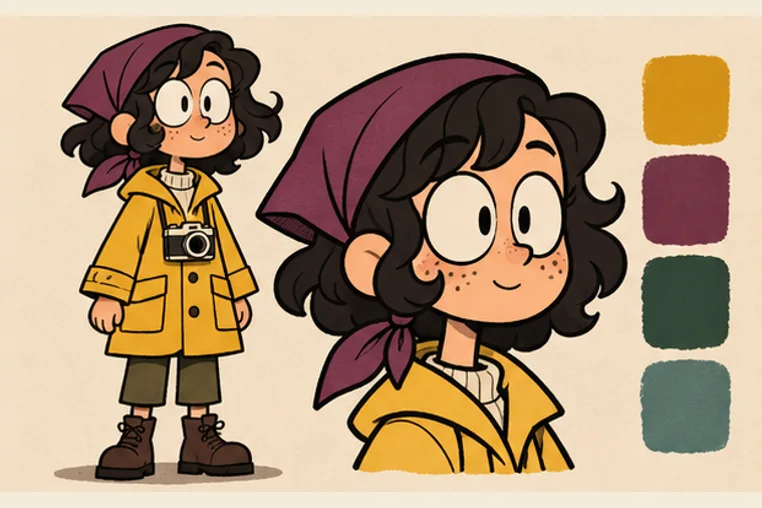
A character can feel at home in a woodland mystery long before you pick a power. Give the design a readable shape, a small set of colors, and a prop that would make sense on an ordinary day. These five choices are starting points for an original drawing.
Start with one large shape you can recognize from across the room. Try a round hood above a stiff coat, or a tall cap above narrow shoulders. Give the feet and hands enough room to act. Sketch the character as a solid black shape. If the camera strap disappears into the coat, move the camera to the outside edge, where the reader can see it before anyone explains what it does.
Try a generously sized head with plain dot or oval eyes and a readable mouth. A lifted eyebrow, a tilted chin, or a mouth held half open can do the work of a long explanation. Give your OC a resting expression first. Then draw the same face looking at the object just as it does something impossible. Keep the nose and hairline in the same place so it still feels like the same person.
Use a strong outer contour and fewer lines inside the figure. A broken cuff or a large patch can suggest an old raincoat with two strokes. Save smaller marks for the object that matters. A chipped edge on the instant camera is more useful than decoration on every button. Leave a little space between the face and a raised hand so both shapes survive when the image is small.
Try pine green, dusty ochre, cream, and a deep plum or rusty red. Give the setting one dominant color and let the clue use a smaller, brighter accent. A mustard coat against deep green reads quickly, while a white instant print catches the eye even at thumbnail size. Use a single solid shadow on the far side of the figure if it helps separate the sleeve from the body.
Put the character somewhere people actually go after breakfast, such as a diner booth, a supply counter, or a public boat ramp. Draw enough ordinary objects to make the strange one easy to spot. A dry dock with one photograph full of wet footprints gives the viewer two things to compare. Keep hints of paper grain or screen-print texture light enough that the clue can still be read.
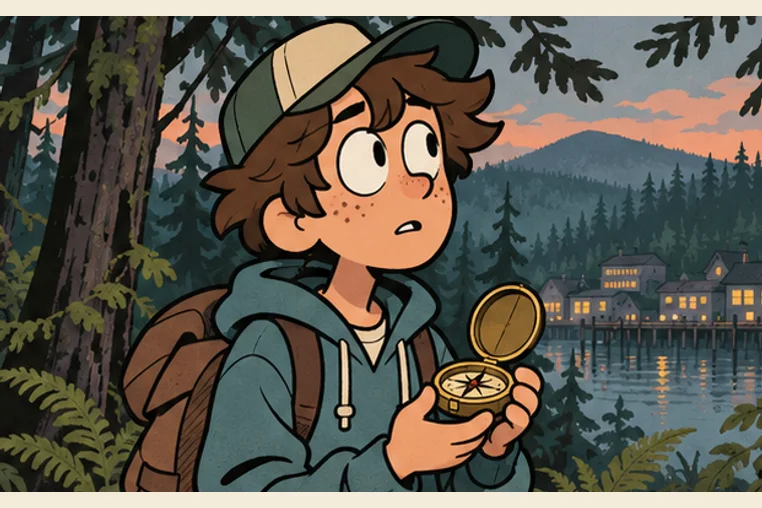
Copy this template into Free description and replace the bracketed details. It gives the drawing a setting, a costume, an object, and a clear direction for the linework and color.
A 12-year-old [boy/girl] with [hair] in a [color] hoodie, standing in a pine forest at dusk, holding a [object]. Gravity Falls style: thick uneven black outlines, flat cel shading, muted 90s palette of pine green and mustard, oversized head, simple dot eyes, screen-print texture. No gradients, no glossy highlights, no anime eyes, no 3D render.
For a mystery scene, add one sentence about what the object does at the moment you want illustrated. A flashlight might cast the shadow of a tree that was cut down last summer. For a full-body portrait, put that beam behind the character so their hands, boots, and flashlight all stay visible.
A resident knows how the town usually works, so a small change can matter. A delivery rider knows which houses leave the porch light on. When the same light follows them to three different addresses, they have a reason to investigate. Give your local a route, a shift, or a chore they could describe from memory. Then put the first clue right in its path.
Invent a job you would find in a roadside attraction. A trainee can restock postcards, repair a broken display, or count the change drawer after closing. Let their work prop lead the story. A price gun might label things with the years they vanished. Design your own badge or shop patch so the outfit belongs to your worker.
A visitor can ask the question everyone else stopped asking. A cousin in town for one week might keep a bus ticket that gives a different departure time every morning. Give them a reason to stay through dinner and a deadline for getting home. Their clothes can show what they expected the trip to be, right down to the shoes they wore to a muddy trail.
Give an original creature one familiar shape and one behavior somebody can observe. A shy thing shaped like a park bench could move only when someone sits beside it. Decide what it wants, where it hides, and which object makes it reveal itself. You can also give an otherwise human OC a small creature twist, such as moth antennae that perk up only near a false story.
Put the identity and outfit in Who are you?. Put the prop and any symbol on it in What do you carry?. Use What is strange about it? for the visible anomaly and any creature twist. For example, a postcard clerk carries a stamp with a split pine emblem, and her moth antennae twitch when that stamp cancels a letter from tomorrow.
Each of these fan-made characters has a role, a prop, and a moment you can draw. Borrow the setup or start with the job and invent a different rule for the object.
Kit’s instant camera catches wet footprints ten seconds before they appear on a dry dock. Draw her holding the print against the same row of boards, with her other hand pressed flat against dry wood.
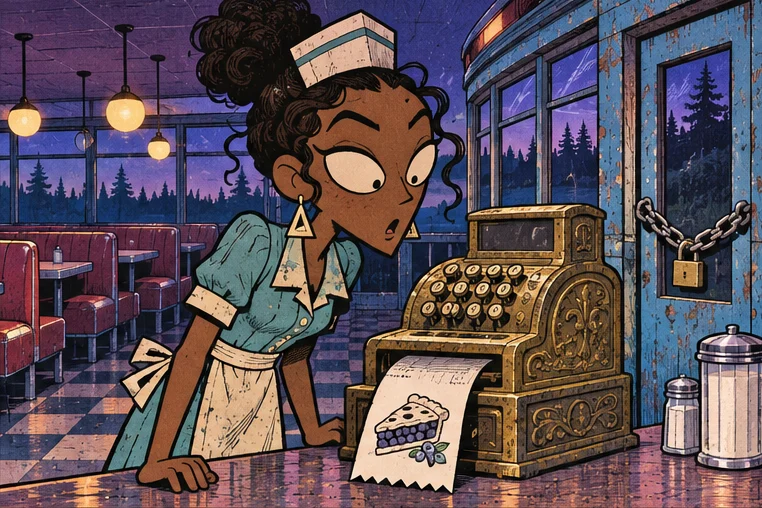
June’s receipt printer lists the next customer’s order while the diner doors are still locked. Show the fresh slip curling across the counter and a figure waiting outside under the CLOSED sign.
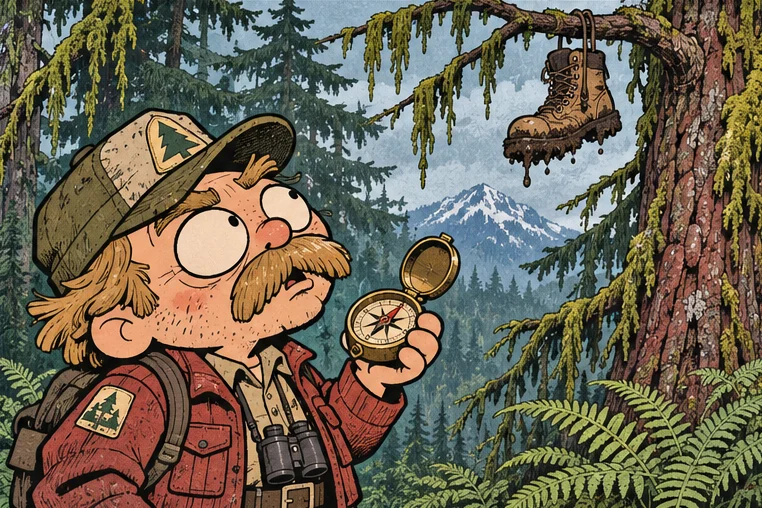
Alder’s brass compass points to whatever the hikers have just lost. Draw its needle lifting toward a boot in a pine tree while the boot’s owner stands below in one sock.
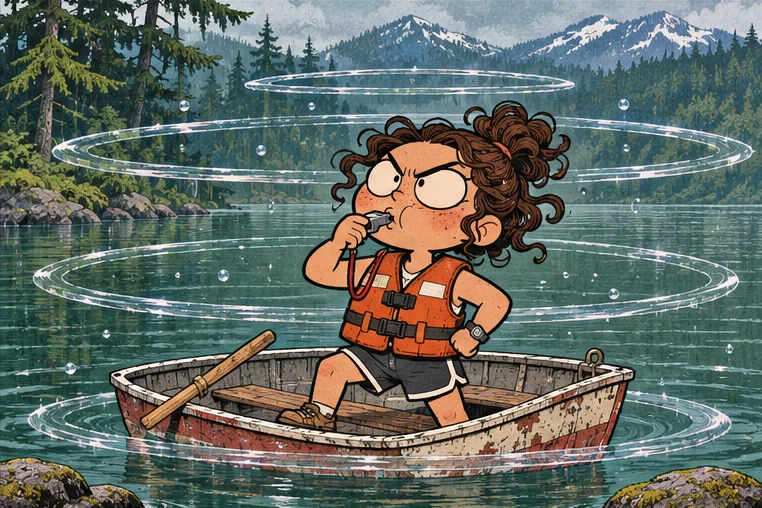
One blow on Maris’s old whistle freezes every ripple in place. Put a floating leaf halfway up a rigid little wave and let Maris decide whether the second blow will undo it.
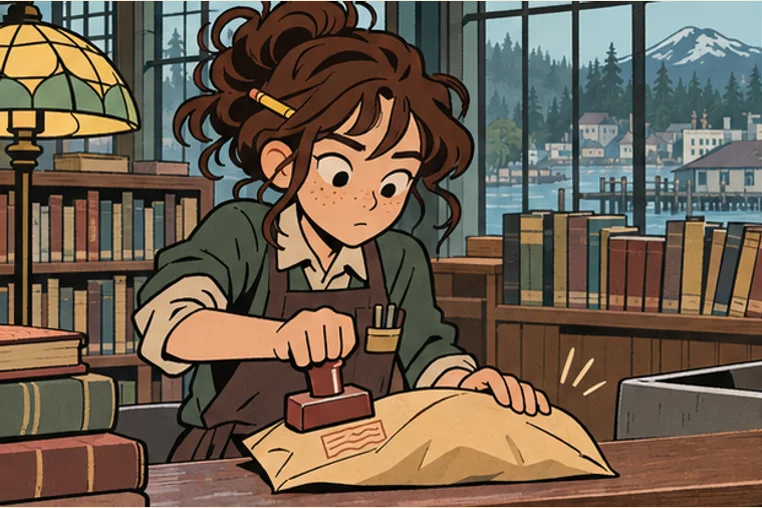
Dot’s date stamp marks the day a borrowed object will come back. When it prints yesterday’s date on an empty envelope, she places the envelope on the returns desk and something begins knocking from inside.
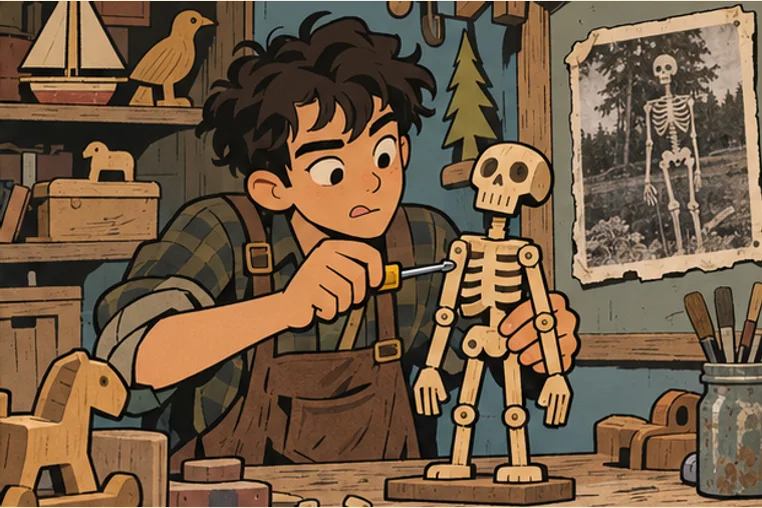
Nico’s toolbox holds a screwdriver that tightens one loose screw in the past. A toy skeleton on the bench straightens up as the faded photo beside it rearranges one of its joints.
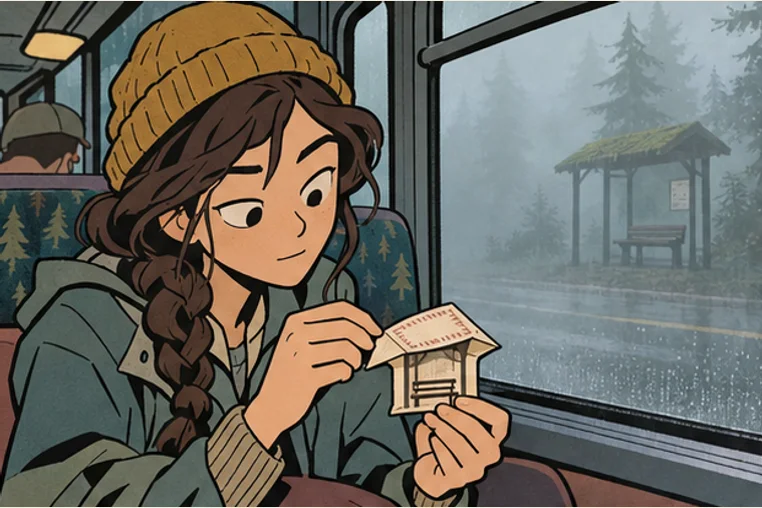
Ivy’s paper ticket grows a new stop each time she folds it. Put her at a bus shelter with a tiny station appearing on the paper and the same roofline taking shape through the fog.
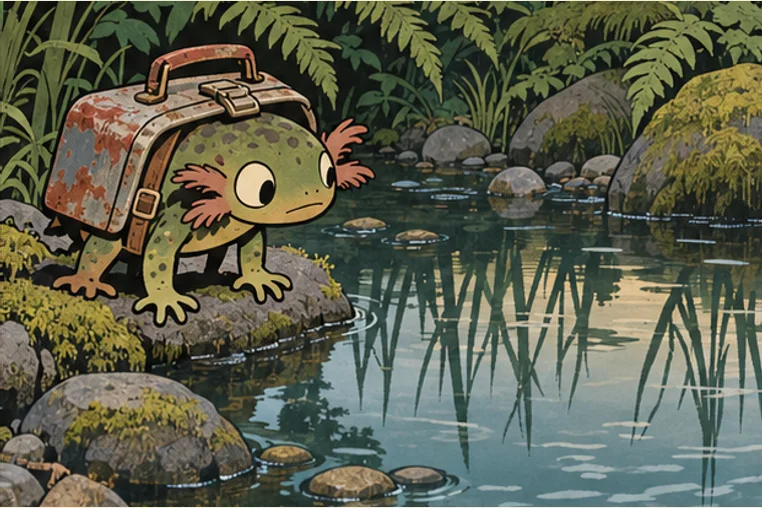
Pip wears a dented lunch tin like a turtle shell. When somebody says its name, the creek reflections show a version of the scene with Pip missing. Put both versions in one frame so the difference is visible.
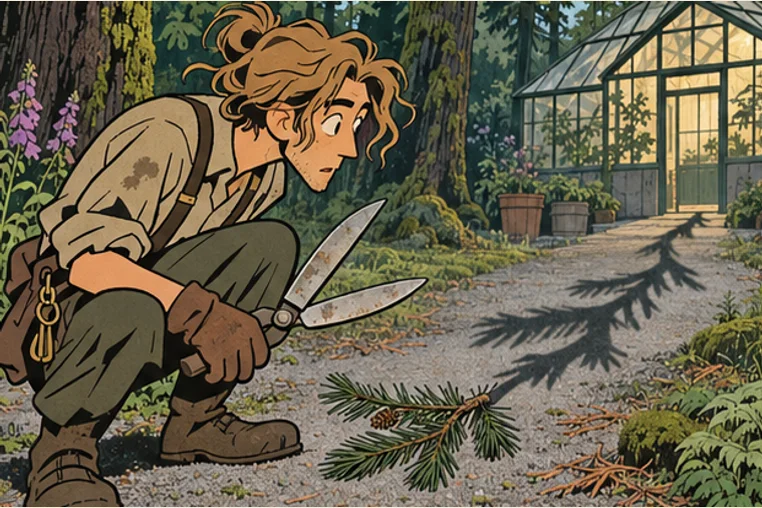
Fern’s garden shears can cut shadows loose from whatever casts them. Her first loose shadow is the shape of a pine branch, which slithers out from under a rake toward the greenhouse.
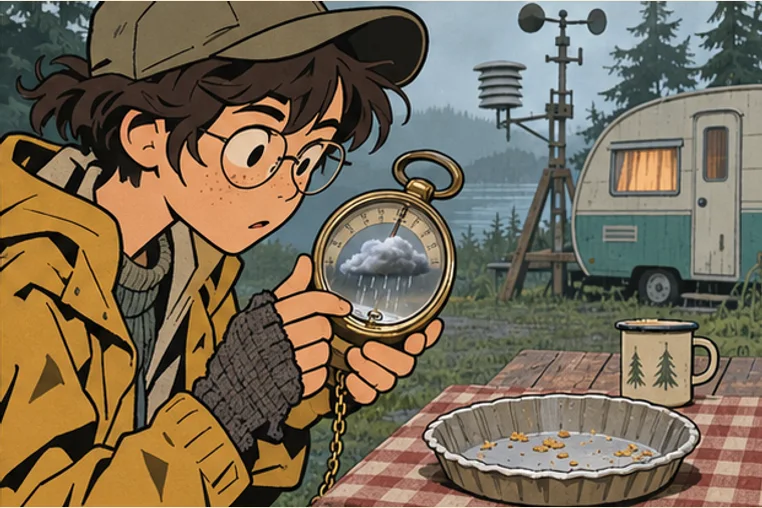
Rory’s pocket barometer drops before someone nearby tells a lie. At a picnic table, one camper explains the missing pie while a cloud forms inside the instrument’s glass.
More ways to turn a character trait into a first scene are in these anime OC ideas.
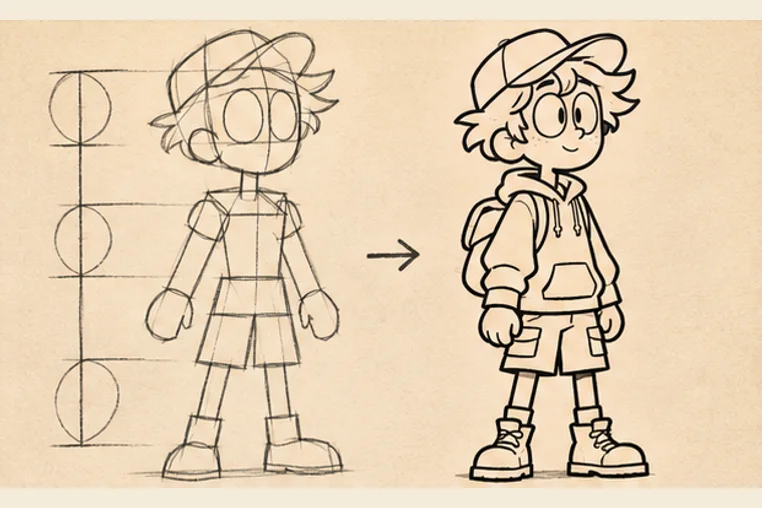
Build your own base on a blank page. Draw a circle for the head, a short block for the torso, and a bent line from the shoulder to the wrist on the side that carries the prop. Use a pear shape for a bulky coat or a narrow box for a figure in tall boots. Leave a little blank space beneath the feet for a ground line.
Put two dots on the same eye line and draw the nose as one simple shape. Mark a center line through the head so you can turn it without losing the face. Keep the character’s hair or hat readable from the back. A torn brim, one curl, or a short ponytail is enough to tell you the same person has turned around.
Trace the base once with the prop and once with the hand empty. If the character has a hunched shoulder from carrying a heavy case all day, keep the posture in both sketches. Mark three solid color swatches beside the figure. Label where each belongs so a second outfit still feels like it belongs to the same person.
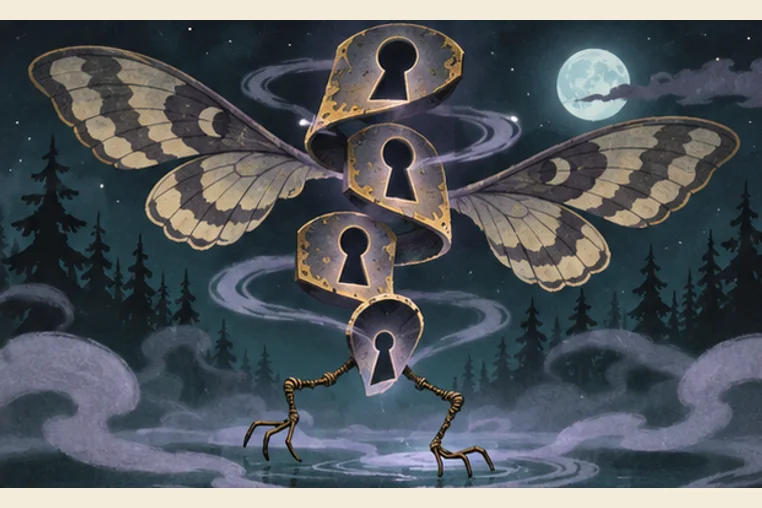
Use a dream bargain as a story device for your own dream demon. Pick a shape that comes from the life your OC already leads, then decide how the thing speaks and what it wants every time it appears. A dream visitor can be funny and unnerving in the same conversation if the deal sounds useful for a moment.
Take Hinge, a bent doorway with three mismatched knobs. It speaks in the clicks, buzzes, and rattles a house makes after lights out. It can make an impossible shortcut appear inside a dream. Every time someone takes it, a working door in the waking town closes for good. Draw the shortcut as an open outline and show one recognizable detail, such as a welcome mat, on both sides.
Build your demon around three decisions. What does it offer a person who needs help tonight? What little sign proves it has already visited? What can the person still choose after the bargain is offered? A stamped key or an extra hinge on a familiar door lets the reader spot a visit before the demon walks onstage.
In the Builder, put the demon’s shape and manner of speaking in the role, its mark or token in the object, and the deal’s visible effect in the anomaly. For a close encounter, use Free description to give the human and the creature different poses and room to face each other.
Draw your own mystery symbol with shapes you can repeat quickly. A split pine, a crescent with one missing tooth, or a crossed pair of fishhooks can fit on a key tag and appear again in a dirt track. Give the symbol a job. It could mark an object that predicts a future event, warn people away from a trail, or tell your character where to bring the camera after dark.
Use the Field journal composition to explain one discovery with an object sketch and two observations. For Kit’s case, sketch the camera above two instant prints of the same boards. Mark the time beside each print. Put an arrow where the first wet footprint appears, then leave one question under the sketches for the next page.
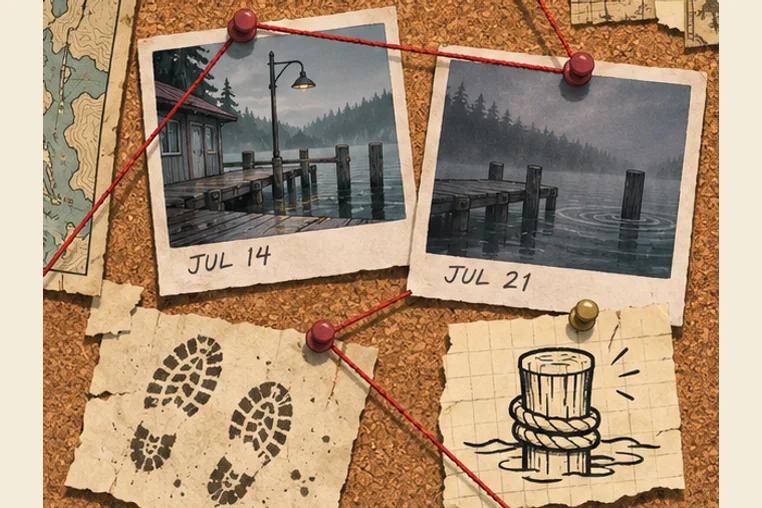
Build a conspiracy board once you have three pieces of information worth comparing. Pin the instant print on the left, a map of the dock in the center, and a note about the tide on the right. Connect details the character can actually see. If one pin is a guess, leave a loose end in the thread so the board still has somewhere to go.
For a journal illustration, give the image a few short labels and leave space to write longer notes yourself. For a whole board, describe the arrangement in Free description and choose Mystery scene. Place your character at the edge of the board holding the newest clue so the drawing still has a person making a decision.
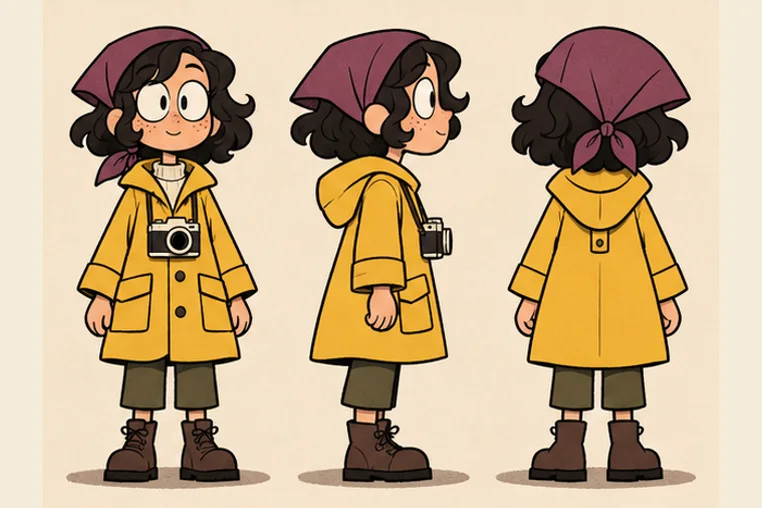
Start with Full-body character to see the outfit, posture, and prop together. Save the image you want to carry forward, then upload it to the character reference sheet tool. The tool offers a three-view turnaround or three views plus expressions. Use the turnaround to see the front, side, and back together.
Choose a reference where the body and outfit read clearly. A shot where Kit holds the print off to one side leaves the front of her coat visible. If the camera strap crosses a particular shoulder or the coat has a patch on one sleeve, keep that detail in mind as you review the views. It helps you keep the prop on the right side when you draw the character again.
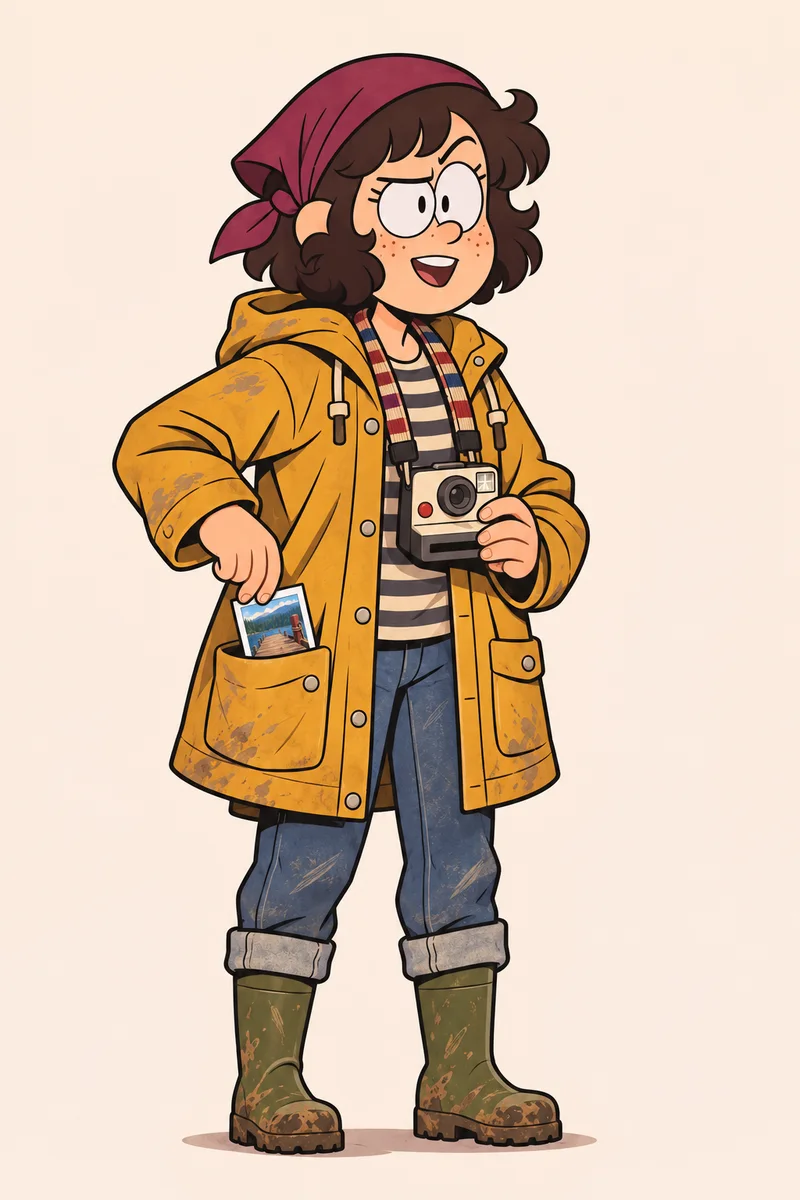
The clerk’s camera strap, raincoat, and boots help carry the design from one drawing to the next.
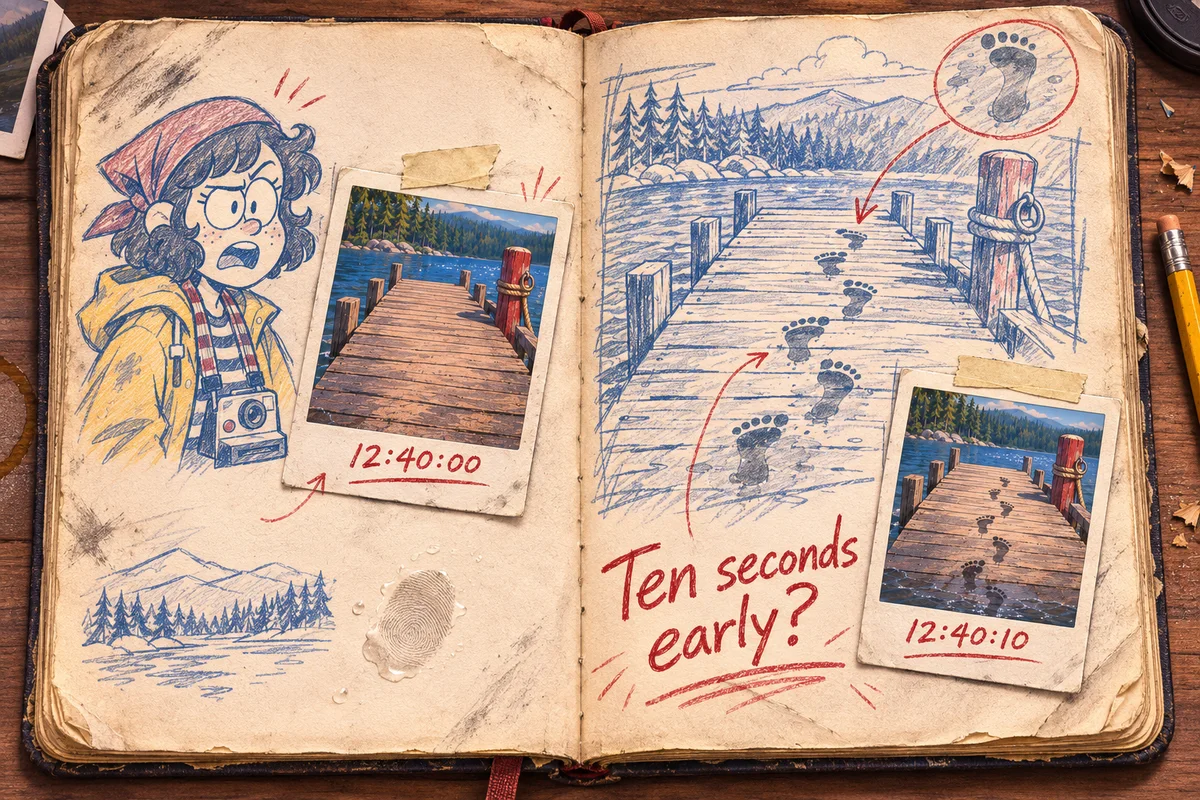
Two photographs show the same red mooring post. The journal records where the first wet footprint lands.
It’s an AI character creator. The Builder turns your role, prop, and anomaly into a prompt, and the generator creates an original illustration from it. Free description lets you write the prompt yourself.
An OC is an original character you invent for a fan story, drawing, or role-play setting. Yours can be a local resident who knows every trail, a visitor who misses the last bus, or a creature that sleeps under a picnic table. Start with an identity you can describe in one sentence and a mystery that belongs to that person.
Start in the Builder with a role and a visible feature, then choose an object and describe the moment its secret shows up. Add a symbol beside the object and a creature twist beside the anomaly if they belong in the same scene. Pick Mystery scene, Full-body character, or Field journal. Use Free description when you want to write the whole setup in your own words.
A dress-up game gives you pre-drawn pieces, such as hairstyles, faces, and jackets, that you can combine on a base. Here, choose an outfit or prop by describing it, then pick a full-body portrait, mystery scene, or field journal as the finished format.
You can use a dream bargain as the starting point for an original dream demon. Give yours a different shape, a new name, its own speech habits, and a rule with a visible cost. The recipe above uses a bent doorway, a voice made from household sounds, and a deal that leaves a mark on the real world.
Begin with a job that puts your character near a dependable object. A photo clerk sees the future in an instant print, a trail guide finds a boot with a compass, and a night cashier gets tomorrow’s order. The best one to start with is the idea you can explain by pointing at two details in a single drawing.
The credit cost depends on the image model you select. Check the Generate button after choosing a model for the current cost before you submit. You can read the examples, copy the style brief, and edit your prompt before generating. Sign in when you are ready to submit an image.
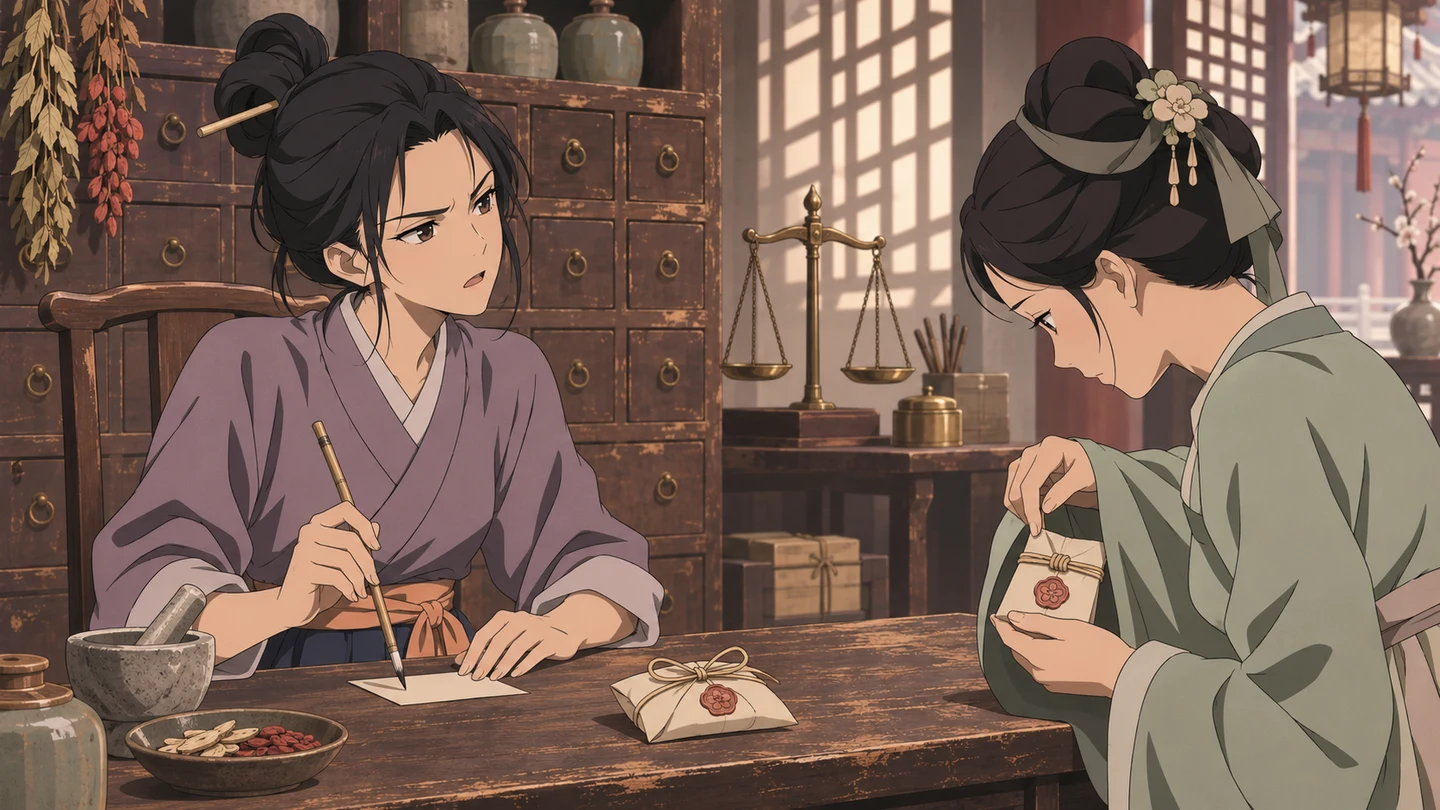 Apothecary Diaries OC MakerPalace apothecaries, court secrets and consultation scenes
 Helluva Boss OC MakerDesign imps and hellhounds for full-body art, turnarounds and story scenes
 Hazbin Hotel OC MakerOriginal demon silhouettes, theatrical powers and character sheets
 Cyberpunk OC MakerOriginal cyberware, street style and character stories
 Dragon OC MakerOriginal dragons, custom scales, wings and powers
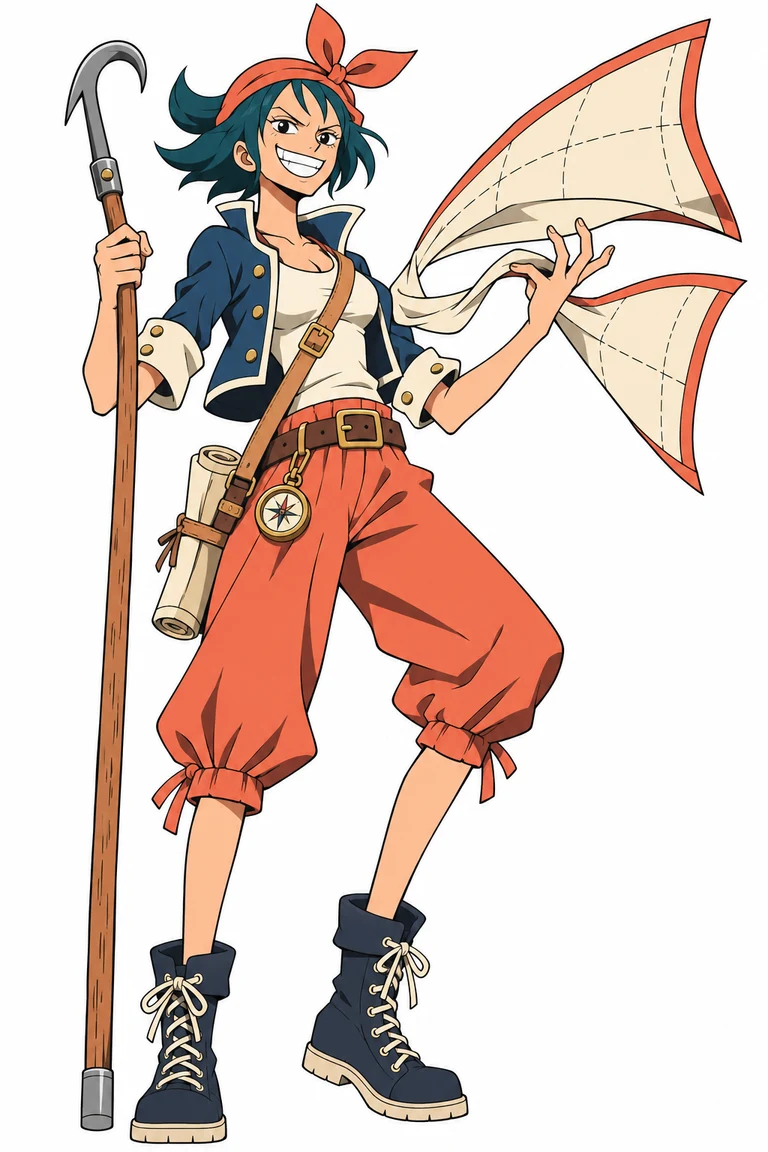 One Piece OC MakerOriginal pirates, Devil Fruits, Haki and crew roles
 CRK OC MakerIngredient-led Cookies, signature skills and 3D-style art
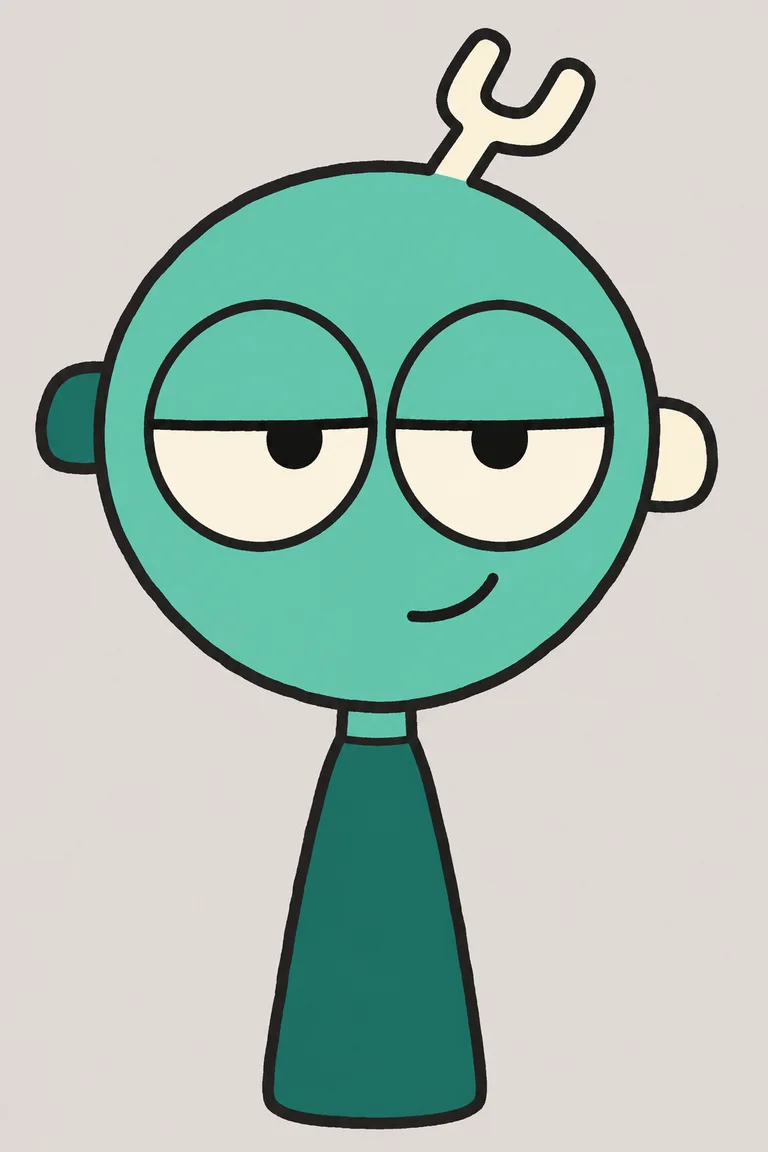 Sprunki OC MakerMusical identities, silhouettes and alternate forms
 Pokémon OCOriginal creatures, trainers and signature moves
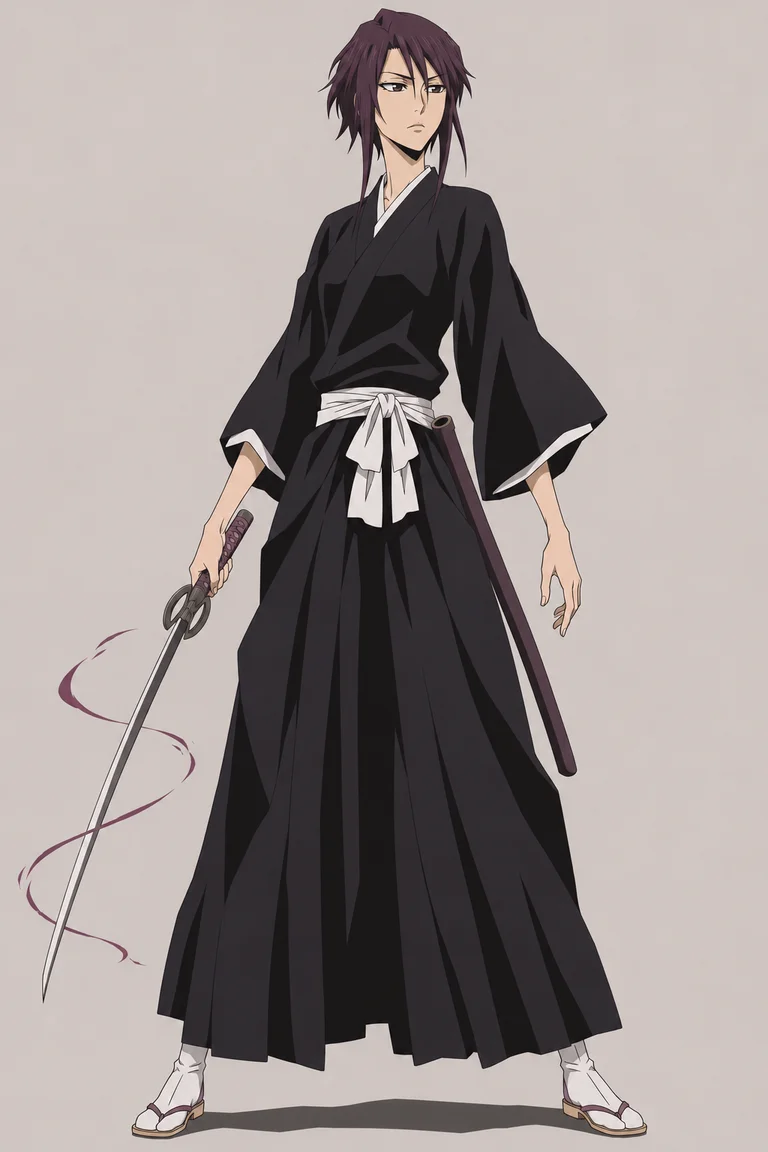 Bleach OCSoul Reapers, Arrancar and spirit weapons
 Anime Character CreatorOriginal characters for your own stories
 Sonic OCAnimal silhouettes and expressive poses
 Murder Drones OCRobot silhouettes, lights and support gear
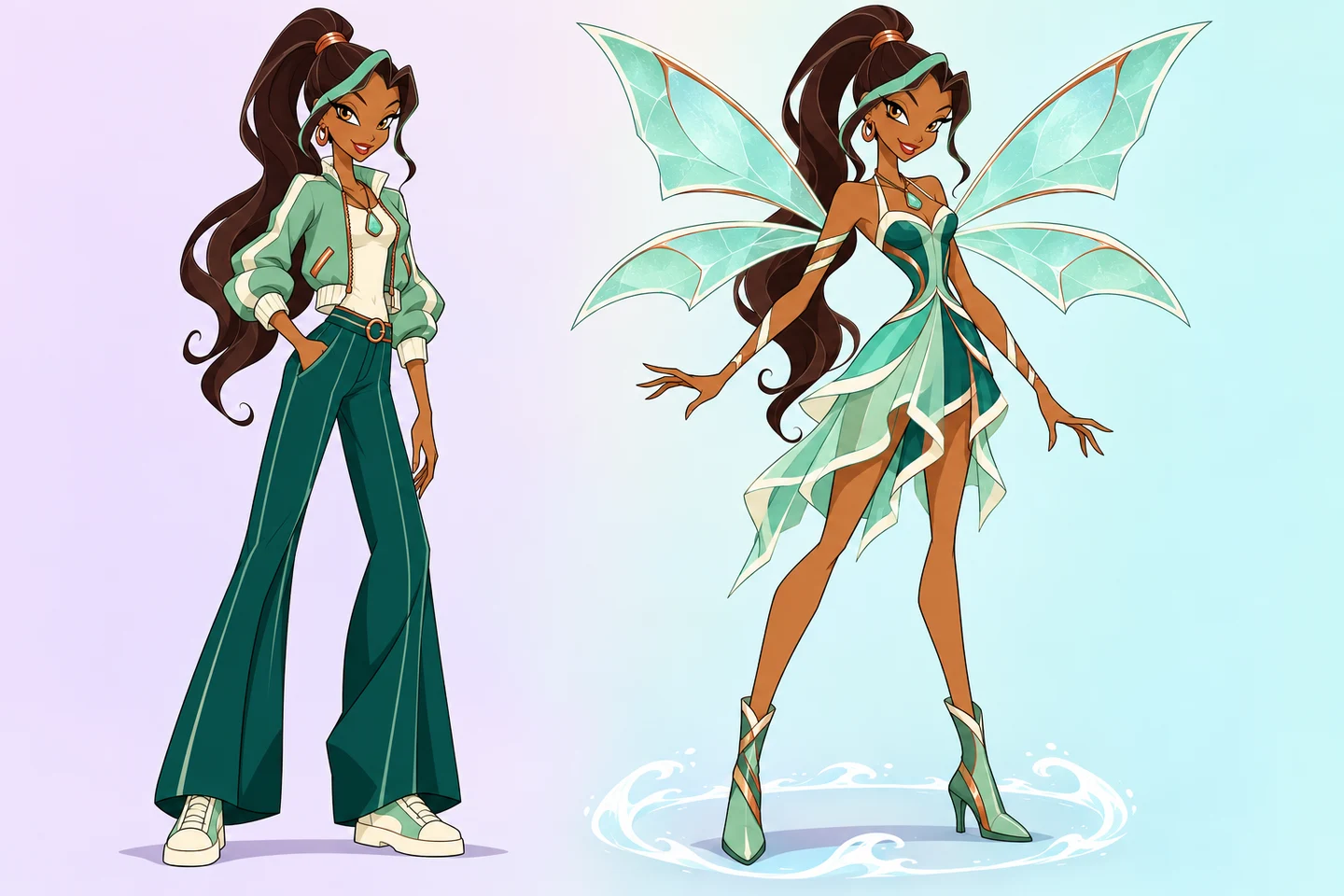 Winx Club OC MakerOriginal fairies, wings and transformations
 My Little Pony OCPony types, mane colors and signature marks
 My Hero Academia OCOriginal powers, costumes and hero stories
 Dandy’s World OCEveryday objects with a Toon personality
 Genshin Impact OCVisions, regional fabrics and signature weapons
 FNAF OCAnimatronic shells, stage props and game-era influences
 JJK OC MakerOriginal sorcerers, cursed techniques and signature moves
 Naruto OCHidden villages, jutsu and shinobi gear
 Attack on Titan OCScouts, ODM gear and original Titan forms
 Demon Slayer OCBreathing Styles, Blood Demon Arts and original sword fighters
 Splatoon OCOriginal ink colors, tentacle hair and streetwear